Water Damage Insurance Claim Steps for Chatham Homeowners
If water is spreading through your Chatham home right now, the insurance claim feels like a second emergency on top of the first. You need to stop the damage, prove the loss, and get a check cut, all while drying equipment is running and your floors are buckling. This walkthrough is built for exactly that situation. It is the same process Chatham Water Restoration uses on live jobs across Central Indiana, refined since we opened in 2018 and built up to a BBB A+ rating with IICRC certified technicians on every crew.
The steps below are ordered the way an adjuster wants to see them. Skip a step and your claim slows down. Document the wrong thing and your payout shrinks. We will tell you exactly what to photograph, what to say, what to sign, and what to refuse. If at any point your situation falls outside what insurance covers, we will tell you directly so you are not blindsided three weeks in. Read the steps in order. Do not jump ahead. Each one feeds the next, and the timeline matters because most policies require prompt notice and reasonable mitigation within 24 to 72 hours of discovery.
What Insurance Actually Covers Before You File
Know what you are filing before you pick up the phone. Carriers reject claims faster when the cause is excluded.
- Sudden and accidental events are usually covered: burst pipes, appliance failures, ice dams, storm driven water.
- Gradual leaks (weeks or months of slow seepage) are typically denied as maintenance issues.
- Sewer backup requires a separate rider on most Chatham policies.
- Flood from rising groundwater needs FEMA flood insurance, not standard homeowners.
- Mold is often capped at $5,000 to $10,000 unless you added an endorsement.
Read more on what is and is not included in our breakdown of homeowners insurance and water damage coverage.
What to Say (and Not Say) to Your Insurance Company
Word choice on the first call shapes the entire claim.
- Say: "I had a sudden water loss at [address] on [date]."
- Say: "The source was a [burst pipe / appliance / storm]."
- Say: "I have called a mitigation company to prevent further damage."
- Say: "I would like a claim number and the name of my assigned adjuster."
- Avoid: "It has been leaking for a while." Even if true, this triggers denial.
- Avoid: Guessing at dollar amounts. Let the adjuster and contractor scope it.
- Avoid: Agreeing to a settlement number on the first call.
- Avoid: Speculating about cause. "I think maybe" opens the door to exclusions.
Documentation Your Adjuster Will Ask For
Have these ready before the adjuster pulls into your Chatham driveway.
- Date and time the damage started
- Cause of loss in one or two sentences
- Photos and video timestamped
- Mitigation invoices from your restoration company
- Receipts for any temporary repairs (plumber visit, board up)
- List of damaged personal property with approximate ages and values
- Receipts or photos of high value items (electronics, furniture, rugs)
- Moisture readings from a certified contractor if available
- Copy of your declarations page showing coverage limits and endorsements
- Maintenance records for the failed component (water heater, dishwasher, supply line)
Deductibles, Depreciation, and the Final Check
Two numbers surprise homeowners most.
- Deductible: Usually $500 to $2,500. Subtracted from your first check.
- Depreciation (ACV vs RCV): Carriers pay actual cash value first, then release recoverable depreciation after repairs are complete and invoiced.
- Code upgrades: Some policies include ordinance and law coverage, which pays to bring older homes up to current Chatham code.
- Contents: Personal property is separate from structure. List every damaged item.
- Additional living expenses: Hotel, meals, pet boarding if your home is unlivable.
- Non recoverable depreciation: Some items (roofs over 15 years, older HVAC) may only pay ACV with no recovery.
- Mortgage company endorsement: Checks over a threshold often require your lender's signature before you can cash them.
Timeline: What to Expect Day by Day
- Day 0: Loss occurs. Shutoff, photos, mitigation call.
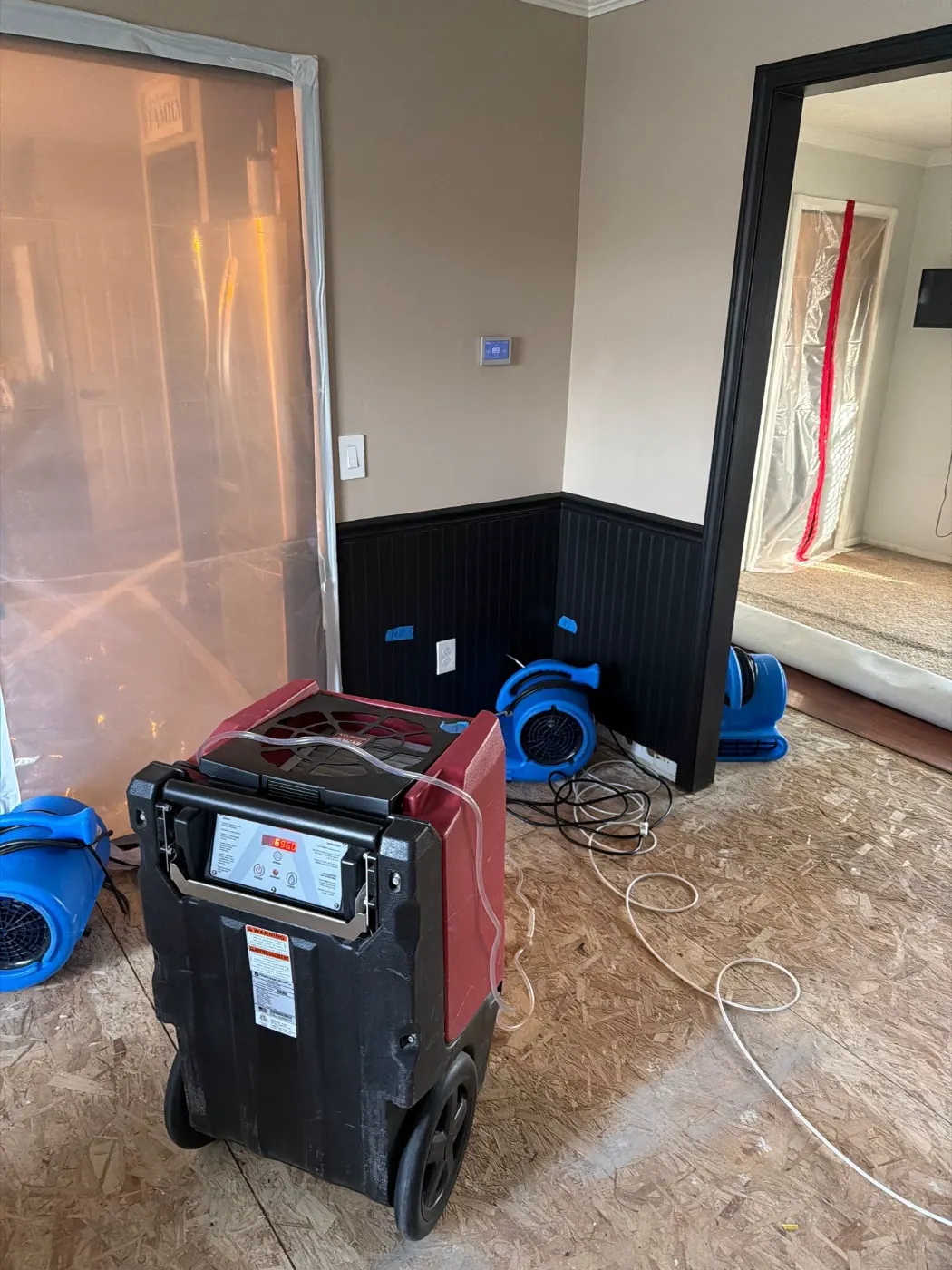
- Day 1: Carrier notified. Claim number issued. Drying equipment installed.
- Days 2 to 4: Adjuster schedules inspection. Drying continues.
- Days 5 to 7: Adjuster inspects. Scope of loss drafted.
- Days 7 to 14: Scope reviewed. Supplements filed if needed. First payment issued.
- Days 14 to 30: Reconstruction begins. Second payment after work completion.
- Days 30 to 60: Final walkthrough, depreciation released, claim closed.
Faster service is possible. Our same day water damage response in Chatham often gets equipment running within hours of the loss, which strengthens the mitigation paper trail.
Common Reasons Claims Get Denied or Reduced
- Reporting the loss too late (over 72 hours raises red flags)
- No proof of mitigation within 24 to 48 hours
- Pre existing damage visible in inspection records
- Long term leak with rusted fittings or staining
- Excluded source (groundwater flood, sump pump failure without rider)
- Missing the cause of loss entirely on the claim form
- Refusing to let the adjuster inspect
- DIY repairs completed before the adjuster could document the damage
- Using unlicensed contractors with no documentation trail
- Inconsistent statements between the phone call and the written claim form
When You Need This Done Right the First Time
An insurance claim handled cleanly pays out faster, fuller, and with less stress. A claim handled sloppily can leave thousands on the table or get denied entirely. Chatham Water Restoration runs this exact 10 step process on every water loss in Chatham, documents to adjuster standards, and bills your carrier directly so you are not floating the cost. If your situation does not warrant a claim, we will tell you that too. Call us now for a free inspection and a straight answer on whether to file.
The 10 step Claim Process
- Stop the source. Shut off water at the main valve or kill power to a leaking appliance. Document the source before you fix it.
- Photograph everything. Wide shots of each room, close ups of damaged materials, the source itself, and any standing water. Aim for 40 to 60 photos minimum.
- Video walkthrough. A 3 to 5 minute video narrating what you see beats still photos in disputes.
- Call your carrier. Report the loss within 24 to 72 hours. Get a claim number in writing.
- Mitigate damage. Your policy requires you to prevent further loss. Call a restoration company to extract water and start drying.
- Save receipts. Every tarp, fan rental, hotel night, and meal out can be reimbursable.
- Meet the adjuster. Have your restoration contractor on site if possible. Two trained sets of eyes catch more.
- Review the scope. Compare the adjuster's scope of loss against your contractor's estimate line by line.
- Negotiate gaps. Missing items get added through supplements. This is normal.
- Receive payment. Initial check usually arrives 7 to 21 days after scope approval, minus your deductible.
Mistakes That Cost Homeowners Thousands
These are the patterns we see in Chatham when claims go sideways.
- Throwing away damaged materials before the adjuster inspects. Keep a sample of flooring, drywall, and cabinet pieces in the garage.
- Signing a contractor's assignment of benefits without reading it. You may sign away your right to negotiate.
- Accepting the first scope without a line by line comparison.
- Skipping content claims because "it is too much work." Contents often add 20 to 40 percent to a settlement.
- Forgetting to claim ALE (additional living expenses) when displaced.
- Letting drying equipment run too long or too short without daily moisture logs.
When to Call a Public Adjuster or Attorney
Most claims do not need outside help. Some do.
- Claim denied entirely and you believe the cause was covered.
- Settlement offer is less than half of your contractor's estimate.
- Adjuster will not respond after 14 days of follow up.
- Carrier is invoking exclusions you do not understand.
- Damage exceeds $50,000 and the scope is contested.
A public adjuster typically charges 10 to 15 percent of the settlement. An attorney is usually a last resort after appraisal clauses and supplements have failed. In most Chatham water losses, a thorough restoration partner like Chatham Water Restoration resolves the gap without needing either.
How Chatham Water Restoration Works With Your Carrier
We handle the restoration side. The adjuster handles the financial side. Our job is to make those two sides match.
- We document moisture readings, IICRC drying logs, and category of water (1, 2, or 3) per S500 standards.
- We write a Xactimate compatible estimate using the same software your adjuster uses.
- We meet your adjuster on site in Chatham at no cost to you.
- We submit supplements when hidden damage shows up after demo.
- We bill the carrier directly when you sign a direction of pay.
- We provide daily drying logs that prove mitigation was performed correctly.
- We translate adjuster shorthand into plain English so you know what is approved.
If you are unsure what category of water you are dealing with, our guide on Category 1, 2, and 3 water damage explains the difference and why it matters for your claim.
Frequently Asked Questions
How long do I have to file a water damage claim in Chatham?
Most policies require notice "promptly" or "as soon as reasonably possible." In practice, file within 24 to 72 hours of discovery. Waiting beyond a week gives carriers grounds to argue you failed to mitigate, even if the damage was sudden.
Will filing a water damage claim raise my premiums?
Often yes, by 10 to 25 percent at renewal, and the claim stays on your CLUE report for 5 to 7 years. If your loss is close to your deductible, Chatham Water Restoration can give you a free estimate so you can decide whether filing makes financial sense.
Does insurance pay the restoration company directly?
Usually yes. Chatham Water Restoration bills your carrier directly on most Chatham claims after you sign a work authorization and direction-to-pay form. You handle the deductible, and we handle the paperwork with the adjuster.
What if my claim gets denied?
Request the denial in writing with the specific policy language cited. Common denial reasons include gradual damage, flood (vs. internal plumbing), or maintenance neglect. You can appeal with additional documentation, hire a public adjuster, or escalate to your state insurance department.
Should I get my own estimate or trust the adjuster's number?
Always get an independent estimate from an IICRC-certified restoration company. Adjuster scopes frequently miss subfloor damage, insulation, and code-required upgrades. Chatham Water Restoration writes in the same Xactimate software adjusters use, which makes supplement requests faster and harder to refuse.
Have a restoration question?
Our IICRC certified Chatham crew is ready to help. Free assessments, estimate based on what we can sees, no pressure.