Storm Flood Cleanup in Chatham: 10 step Restoration Plan
When a storm rolls through Chatham and you walk downstairs to standing water, the next two hours decide how much of your home you keep and how much you replace. Storm water is not the clean water from a supply line. It carries lawn chemicals, sewage from overwhelmed city mains, silt from yards uphill, and whatever bacteria the floodwater picked up along the way. The Institute of Inspection, Cleaning and Restoration Certification (IICRC) classifies almost all storm intrusion as Category 3, the most contaminated tier, which changes everything about how cleanup must be handled.
At Chatham Water Restoration, we have responded to storm calls across central Indiana since 2018, and the homeowners who come out best are the ones who understand the choices in front of them before they pick up the phone. This guide is built around a single deep comparison: the realistic paths you can take after storm flooding, what each one costs, what each one protects, and where each one fails. We are IICRC certified, BBB A+ rated, and if your situation does not actually need full restoration, we will tell you directly. That promise only works if you know what to compare. Read carefully, because the wrong path on a Category 3 loss is the kind of mistake you discover six weeks later when the drywall starts smelling and the insurance window has closed.
What Storm Water Actually Does Inside Your Home
When a storm pushes water into a Chatham property, the damage starts the moment the first drop touches porous material. Drywall begins wicking moisture upward at roughly one inch per hour, which means a basement that flooded to six inches at midnight already has wet drywall climbing past the baseboards by sunrise. Subflooring swells. Insulation inside finished walls turns into a wet sponge that holds water against the studs for weeks. Hardwood floors cup within the first day and crown within the first week if the moisture sits underneath. None of this is dramatic at first glance, which is the trap. The water looks like it is going down, but the materials around it are still soaking.
The hidden damage is often worse than what you can see. Water that reaches an electrical outlet travels through the wall cavity along the wiring, soaking insulation in places no visual inspection will reveal. HVAC return ducts running along basement ceilings pull humid air through the rest of the house, depositing moisture in upstairs closets and behind furniture on the main level. Particleboard cabinet bases, common in laundry rooms and kitchens, swell and crumble from the inside out. Even concrete, which most homeowners assume is waterproof, holds significant moisture in its pores for weeks and will continue feeding humidity into a space long after the visible surface looks dry. This is why a quick shop vac and a box fan, while well intentioned, rarely solves the actual problem.
Then there is the category problem. The IICRC, the certifying body that sets restoration standards, classifies water into three categories. Category 1 is clean water from a supply line. Category 2 is gray water with some contamination, like a dishwasher overflow. Storm water almost always lands in Category 3, the blackwater tier, because it has crossed soil, asphalt, or sewer lines on the way into your home. Category 3 water requires removal of any porous material it touched, including carpet pad, drywall up to at least 12 inches above the waterline, and often the carpet itself. This is not us being aggressive. It is the standard, and any contractor cutting corners here is setting you up for a mold claim six months later. If you want a deeper look at how these classifications drive cost and scope, our breakdown of Category 3 water removal covers it in detail.
Get Help Before the Damage Spreads
Storm flooding gets worse by the hour, and the gap between a manageable cleanup and a structural rebuild is often a single day of delay. Chatham Water Restoration answers calls 24 7 across Chatham and Central Indiana, brings the right equipment on the first trip, and documents everything your insurance carrier needs. If you have water in your home right now, call us. If you are unsure whether you need professional help, call us anyway. We will tell you honestly what the situation requires.
Cost, Insurance, and What Actually Gets Covered
Homeowners in Chatham ask about price within the first two minutes of every call, and the honest answer is a range. A small finished basement with Category 3 water, partial drywall removal, and three days of drying typically lands between $3,500 and $7,500. A larger flood involving multiple rooms, hardwood removal, and content cleaning can run $10,000 to $25,000 or more. Commercial properties scale higher based on square footage and business interruption factors. We give you the number in writing before work starts, and if your scope is smaller than you feared, we will tell you directly.
Insurance is the part that trips most people up. Standard homeowners policies cover sudden interior water damage, like a burst pipe, but storm flooding through a foundation or window well often falls under flood insurance, which is a separate policy through NFIP or a private carrier. Sewer backup is its own endorsement. We document everything with photos, moisture maps, and itemized scope sheets in the format adjusters expect, which speeds approvals. If you are dealing with basement intrusion specifically, our guide to flooded basement cleanup and cost explains how coverage typically breaks down line by line.
One detail worth knowing before you file: most policies have a deadline for reporting damage, often 30 days or less, and many require that you take reasonable steps to prevent further damage. That second clause is why calling a restoration company quickly actually strengthens your claim rather than complicating it. If a roof leak goes unreported for a week and the ceiling collapses, the adjuster can argue the secondary damage was preventable. Photos taken in the first hour, an itemized list of damaged contents with approximate purchase dates, and a copy of the restoration scope all give the adjuster what they need to approve the claim without back and forth.
What we will not do is inflate a scope to pad an estimate. Chatham Water Restoration is BBB A+ rated, IICRC certified, and built on the idea that the easiest way to get the next call from your neighbor is to do this one right. If your damage is light enough that you can dry it with rented equipment, we will say so. If it is heavy enough that you need full mitigation plus reconstruction, you will see exactly why in the documentation we hand you.
What the First 24 Hours Should Look Like
When Chatham Water Restoration arrives at a flooded Chatham home, the first job is extraction, not drying. We pull standing water with truck mounted units that move roughly 100 gallons per minute, because every gallon left on the floor is a gallon evaporating into your walls and ceiling. After extraction comes the harder, less visible work. We pull baseboards, drill weep holes behind them, lift carpet to inspect the pad, and use thermal imaging and penetrating moisture meters to map exactly how far the water traveled. You will often see us marking walls with painters tape at 16, 24, and 32 inches because moisture migrates in patterns that match stud bays, not in tidy horizontal lines.
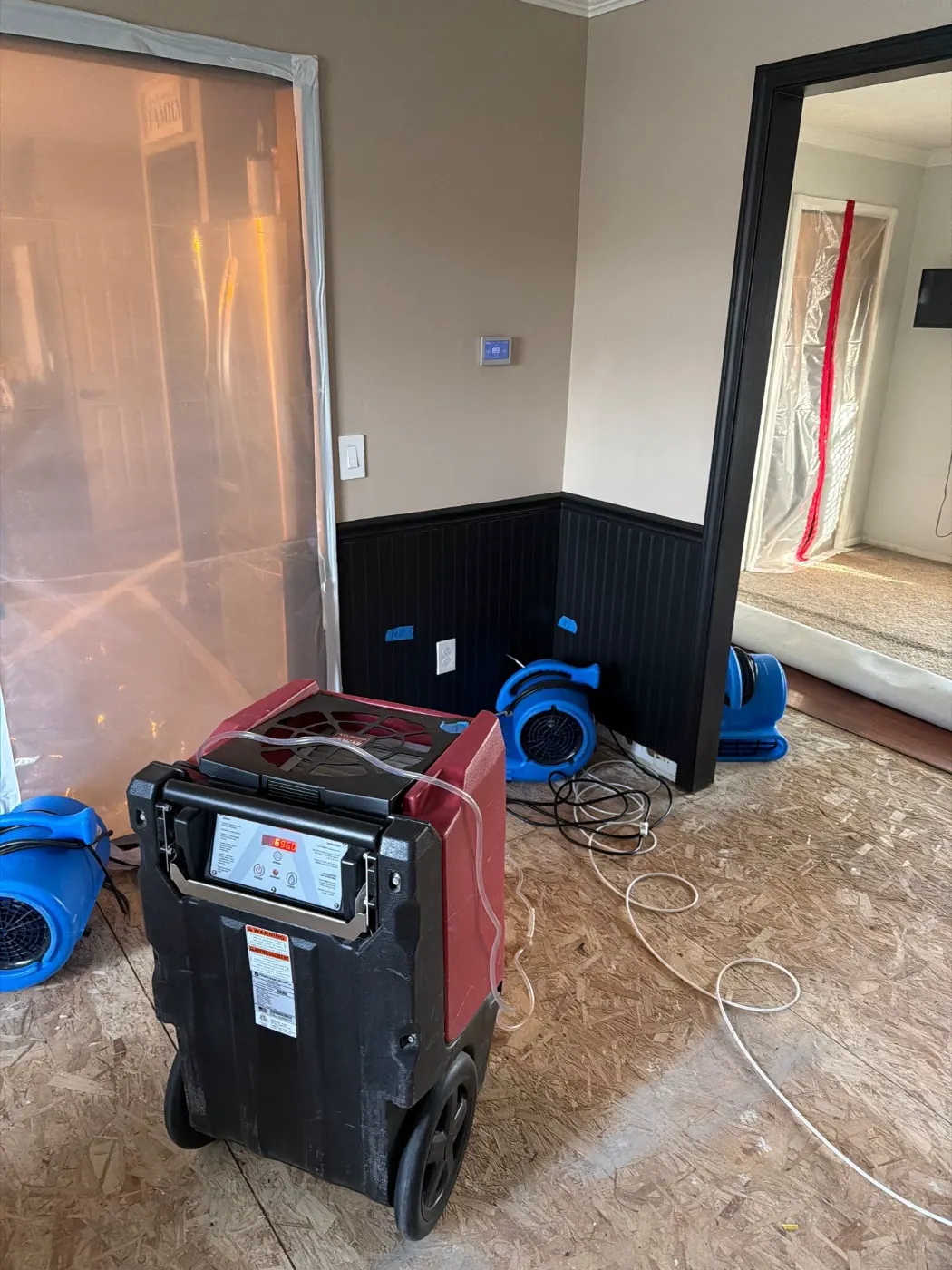
Once the wet materials are documented and removed, we set the drying environment. A finished basement in Chatham typically takes 8 to 14 air movers and 2 to 4 commercial dehumidifiers running continuously for three to five days. We monitor moisture content daily, log it, and adjust equipment placement as readings drop. This documentation is what your insurance adjuster needs, and it is also the difference between a basement that comes back fully and one that smells musty next August. Our complete storm damage restoration service page walks through how this process integrates with roof, siding, and exterior repairs when the same storm caused damage above and below.
Antimicrobial application is the step homeowners often forget to ask about, and it matters more in storm work than almost anywhere else. Because storm water carries bacteria, fungal spores, and whatever was sitting on the lawn before it rolled into your basement, every surface the water touched needs to be treated after extraction and before drying completes. We use EPA-registered antimicrobials applied at the manufacturer's specified dwell time, and we treat framing, subfloor, and any salvageable material that stayed in place. Skipping this step is how you end up with a basement that passes a moisture meter test but grows visible mold along the bottom plate of a stud wall two months later. It is also worth knowing that drying times stretch in humid Chatham summers, when outdoor dew points climb above 65 degrees and dehumidifiers have to work twice as hard to pull moisture out of the air before it reabsorbs into your materials.
Frequently Asked Questions
How fast can Chatham Water Restoration respond to storm flooding in Chatham?
Our standard dispatch window for Chatham emergency calls is 60 to 90 minutes, 24 hours a day. Severe regional storms can extend that, and we will give you an honest ETA on the phone.
Is storm floodwater always Category 3?
In almost every case, yes. Storm runoff carries soil, sewer overflow, pesticides, and animal waste, which classifies it as Category 3 black water under IICRC S500. That changes what we can save versus what must be removed.
How long will drying take after a flood in my Chatham home?
Typical structural drying runs 3 to 5 days. Concrete slabs, hardwood, and wall cavities with dense insulation can push timelines to 7 to 10 days. Chatham Water Restoration logs daily readings so you see actual progress.
Will homeowners insurance cover storm flood cleanup?
Sudden interior water from storm-driven roof or window breaches is often covered under homeowners policies. True ground flooding usually requires separate flood insurance. Chatham Water Restoration documents the source and scope so your adjuster can rule correctly.
What does storm flood restoration cost in Chatham?
Most residential storm flood projects in Chatham fall between $3,500 and $15,000 for mitigation, with reconstruction priced separately. Severity, square footage, and category drive the final number. Chatham Water Restoration provides a written scope before work begins.
Have a restoration question?
Our IICRC certified Chatham crew is ready to help. Free assessments, estimate based on what we can sees, no pressure.